
To paddle a tandem kayak, synchronize strokes with your partner and communicate clearly. The front paddler sets the rhythm, while the rear steers.
Mastering the art of tandem kayaking can turn a water adventure into a fantastic team-building experience.
Paddling in sync with a partner provides both a physical workout and a lesson in coordination and cooperation.
Steering a kayak built for two demands clear communication and an understanding of each paddler's role.
The person in the front focuses on maintaining a consistent pace and direction, while the one in the rear takes charge of navigation and making subtle directional adjustments.
It's an engaging dance on water that, when done well, creates an efficient and enjoyable journey. Tandem kayaking is not only about strength but also about the rhythm and harmony between participants, making it a unique aquatic adventure.

Setting Out: The Basics Of Tandem Kayaking
Setting Out: The Basics of Tandem Kayaking begins with understanding what tandem kayaking is all about. It's the art of coordination and teamwork; two paddlers working in sync to glide across water surfaces.
Mastering the tandem kayak offers a unique bonding experience and can be more stable than solo kayaking for beginners.
Before dipping your paddles in the water, let's explore the steps to ensure a memorable and safe journey.
Also Read How to Use a Bottom Bouncer
Choosing The Right Tandem Kayak
Selecting a suitable kayak is crucial. It should accommodate both paddlers comfortably. Look for adjustable seats and ample legroom. The kayak’s length and width determine stability and maneuverability.
Longer kayaks track straighter while wider kayaks offer more stability. Materials range from inflatable plastic to sturdy fiberglass, affecting durability and price.
- Weight Capacity: Ensure the kayak can support both paddlers plus gear.
- Storage Space: Check for secure storage for personal items and supplies.
Essential Gear For Your Journey
Paddles: Choose lightweight, durable paddles that match your height and strength.
| Paddler's Height | Paddle Length |
|---|---|
| Under 5'5" | 210 - 220 cm |
| 5'5" - 5'11" | 220 - 230 cm |
| Taller than 5'11" | 230 - 250 cm |
Personal Flotation Devices (PFDs): A must-have for safety. Each paddler needs a well-fitting PFD.
Safety Kit: Include a whistle, rope, and a waterproof bag for electronics.
Additional Items: Consider a spray skirt for choppy waters, sunscreen, water bottles, and snacks. For sunny or windy conditions, sunglasses and hats are useful.
Once you've chosen the kayak and packed your gear, practice communication signals. Coordination is key in tandem kayaking. Sit, communicate, and paddle in harmony. Now, with the right preparation and understanding, you're set to enjoy the tandem kayak adventure!
Credit: www.boteboard.com
Seating Arrangements And Responsibilities
Tandem kayaking is a dance on water. Two paddlers move as one. Seating positions and responsibilities define the rhythm. They shape the journey. Good coordination and communication make the adventure smooth and enjoyable.
Front vs. Back: Who Sits Where?Front Vs. Back: Who Sits Where?
Seating in a tandem kayak is critical. It affects balance, control, and comfort.
| Front Seat | Back Seat |
|---|---|
| The front is for view and rhythm. | The back is for steering and speed. |
| Lighter or less experienced paddlers often sit here. | Heavier or skilled paddlers fit best here. |
Paddlers must agree on seats. The front paddler focuses on stroke consistency. The back paddler must align their strokes and maintain direction.
Paddler Roles: Navigation and PowerPaddler Roles: Navigation And Power
Every paddler has a job. The front is the kayak's eyes. The back is its motor and rudder.
- Front Paddler: Sets the pace. Watches for obstacles. Communicates clearly.
- Back Paddler: Matches the front's rhythm. Provides power. Steers the kayak.
Sync your moves. Work as a team. Success in tandem kayaking is about partnership. Everyone has a role to play. Happy paddling!
Paddling In Sync: Techniques For Teamwork
Mastering the art of tandem kayaking hinges on partners paddling in harmony. Teamwork is the key to a smooth ride. Achieve perfect synchrony with these proven techniques.
Starting In Unison
Setting off on the right stroke together is crucial. Here's how:
- Position yourselves with the stronger paddler in the back.
- Communicate before you start. A simple "Ready? Paddle!" works.
- Begin with the front paddler setting the pace. The back follows.
- Mirror strokes to avoid clashing paddles.
Maintaining Rhythm And Pace
Once moving, keeping a consistent pace ensures efficiency. Implement these strategies:
- Stay alert to each other's movements.
- Use verbal signals to adjust the speed if needed.
- Regularly check that paddles enter the water together.
- Rest together to avoid fatigue.
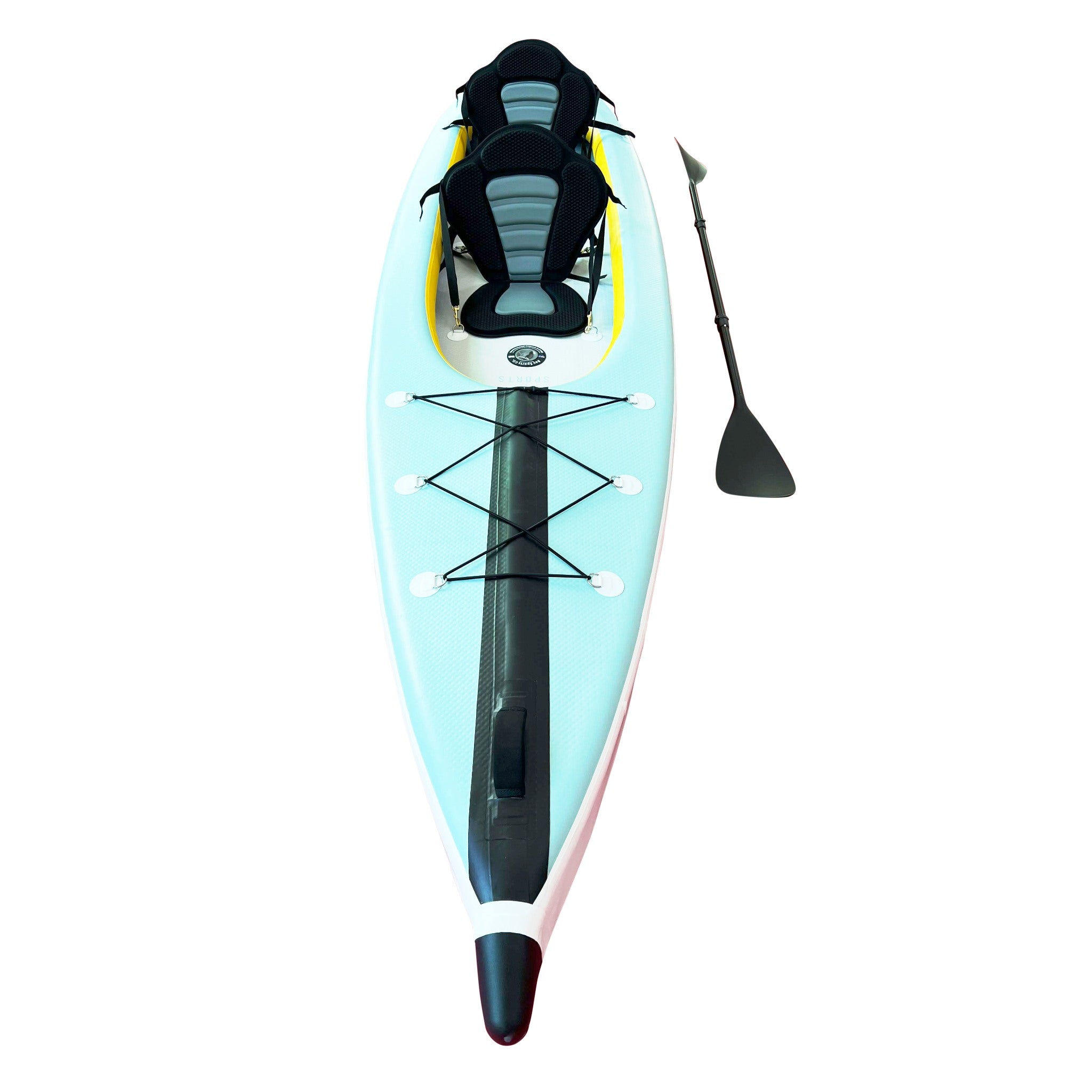
Credit: www.baysports.com.au
Communication: The Key To Harmony On Water
Paddling a tandem kayak requires teamwork and coordination. Just like in a dance, both paddlers must move in sync to glide through the water efficiently. The secret to maintaining this kayaking harmony lies in clear and effective communication. Without it, you might find yourselves paddling in circles or, worse, causing tension in your dual adventure. Read on to discover how verbal and non-verbal cues can keep your kayak on a straight course and your paddling partnership strong.
Verbal Cues And Signals
The backbone of tandem kayaking is verbal communication. It does wonders for coordination. Here's a quick guide:
- "Ready?"—Check if your partner is prepared to start paddling.
- "Switch!"—Signal to change paddling sides in unison.
- "Stop!"—Indicate that both should cease paddling.
- "Stroke!"—Synchronize your paddling tempo.
Short, clear instructions ensure you both act together. Mistimed strokes or direction changes can lead to a wet and wild ride.
Non-verbal Communication Patterns
Sometimes the sounds of nature drown out our voices, making non-verbal signals essential. Key gestures to master:
| Gestures | Meaning |
|---|---|
| Nodding | Agreement to move forward or start paddling. |
| Hand Signals | Directing which side to paddle on. |
| Tap on Hull | Attention needed or readiness to stop. |
| Paddle Held Up | Need to pause or assess the situation. |
In a well-coordinated tandem kayak, partners use a mix of these verbal and non-verbal techniques to navigate waters seamlessly. Paying attention to each other's cues allows for smooth sailing and an enjoyable journey.
Navigating Challenges: Strategies For Common Scenarios
Navigating Challenges: Strategies for Common Scenarios while tandem kayaking can turn an average trip into an unforgettable adventure. Coordination and teamwork are key to a smooth ride. Let's dive into effective strategies for common scenarios you might face on the water.
Turning And Maneuvering Together
Synchronizing your movements is vital for efficient turns. Follow these steps:
- Communicate: Decide on the turn direction together.
- Paddle in Unison: The front paddler sets the rhythm.
- Apply Sweep Strokes: Use wide, sweeping strokes on the turn side.
- Reverse Paddling: The back paddler can aid by paddling backward on the opposite side.
Dealing With Wind And Currents
Battling wind and currents requires strategy. Consider these tips:
| Scenario | Strategy |
| Headwind | Lean forward, and use short and fast strokes. |
| Downwind | Work with the wind, time your strokes for efficiency. |
| Crosswind | Paddle on the upwind side to maintain a straight path. |
| Strong Currents | Angle into the current or eddy, and paddle firmly together. |
All techniques require practice. Stay alert, communicate clearly, and enjoy the challenge.
Safety First: Precautions And Best Practices
Kayaking with a partner doubles the fun and can enhance stability, but like any water activity, it demands specific safety measures. Whether you're a beginner or an experienced paddler, it's essential to know and employ safety practices. This ensures you and your partner enjoy the adventure without compromising safety.
Capsizing Drills And Recovery
Mastering what to do if your kayak tips over is crucial. Proper capsizing drills aid in staying calm and safe. Here's how to stay secure:
- Perform practice drills in calm, shallow waters.
- Learn to exit the kayak swiftly and safely.
- Work as a team to right the kayak and re-enter.
Regular practice turns correct responses into reflex actions. This ensures you can recover quickly from a flip.
Awareness Of Surroundings
Staying alert to your environment is paramount for preventing accidents. Take note of these points:
- Keep your eyes on the weather and water conditions.
- Look out for other watercraft and swimmers to avoid collisions.
- Know the signs of fatigue and take breaks before exhaustion sets in.
By remaining vigilant, you can anticipate and maneuver away from potential hazards.
Further Adventures: Advancing Your Tandem Skills
Taking your tandem kayaking prowess to the next level calls for guts, skills, and curiosity for thrilling escapades on the waves.
Whether you’ve ridden the rivers as a dynamic duo or tackled the tides with a trusted partner, enhancing your tandem kayaking techniques can transform a simple paddle into an epic journey. Let’s delve into mastering advanced maneuvers and preparing for those longer voyages that await.
Learning Advanced Paddling Techniques
Tandem kayaking is about teamwork; syncing your strokes becomes even more crucial as you face greater challenges.
- Edging: Practice leaning the kayak on its side. This helps in swift turns.
- Bracing: Master low and high braces to prevent capsizing in choppy waters.
- Rolling: Learn to execute a roll together. It’s a vital skill for self-rescue.
Mastering these techniques requires patience and lots of practice on the water. Try them in calm waters before heading to more challenging environments.
Planning For Extended Tandem Expeditions
Long-distance travels in a tandem kayak are exhilarating. They demand thorough preparation.
| Preparation | Details |
|---|---|
| Route Planning | Study maps, understand the waterways, and know your start and end points. |
| Gear Check | Ensure all equipment is in top shape and suited for the duration of the expedition. |
| Provisions | Calculate food and water needs, and pack extra for emergencies. |
| Safety Pack | Include a first-aid kit, repair tools, and a communication device. |
Training and preparation transform benchwarmers into seasoned adventurers. Don't rush the process. Build endurance with shorter trips before the big one.
Frequently Asked Questions On How To Paddle A Tandem Kayak
Where Should The Stronger Paddler Sit In A Kayak?
The stronger paddler should sit in the back (stern) of the kayak for effective steering and power.
Who Steers In A Double Kayak?
In a double kayak, the person in the back seat is responsible for steering and controlling the direction, while the front paddler focuses on maintaining a steady pace.
Do Both People Have To Paddle In A Tandem Kayak?
Yes, in a tandem kayak, both individuals should paddle to efficiently navigate and maintain speed, although one can rest if needed.
Conclusion
Embarking on a tandem kayak adventure is thrilling. Mastering the techniques ensures seamless paddling and synchronicity. Remember, communication and rhythm between partners are key.
With practice, coordination will feel natural, making your kayak excursions more enjoyable. So, grab a paddle, find a buddy, and hit the water with confidence! Happy kayaking!
It's like a breath of fresh air.
ReplyDelete